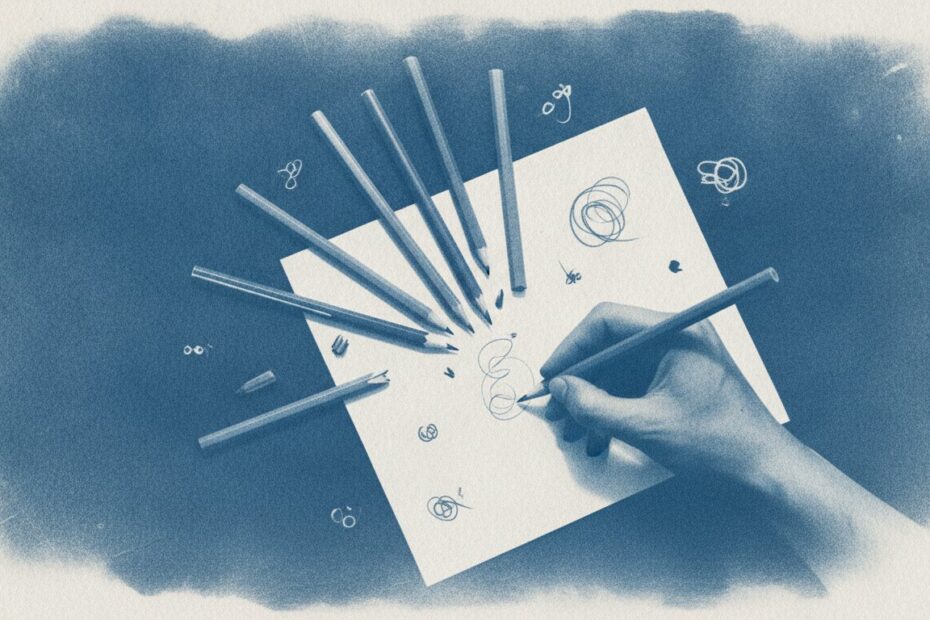
Three graphite pencils (HB, 2B, and a 4B or 6B) cover most beginners for about the price of a sandwich. Skip the 24-piece tins; they are the first thing I would pull out of the cart. I’m Dylan, between jobs and on a tight budget, so I bought the cheap packs, mid-priced sets, and single pencils to see what held up. This guide covers graphite, charcoal, and colored pencils and builds a simple starter set from them, with grade ranges and typical prices, not brand promos. It suits adults, students, and kids of all ages, and it needs only a few items.
Types of Pencils for Drawing
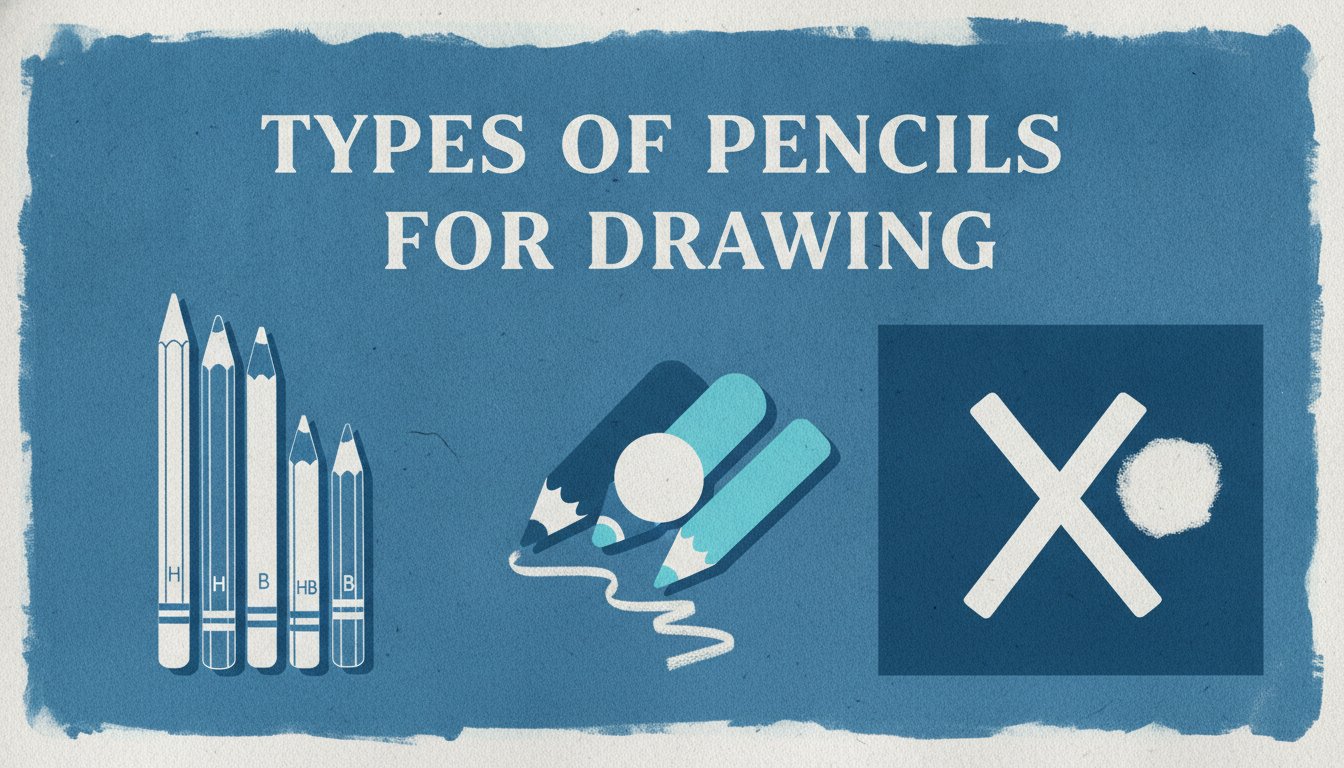
Drawing pencils come in several types, and each has a distinct look and feel. Here is what each does and who it suits.
Graphite Pencils
Graphite pencils are the standard grey drawing pencils, loved by artists and beginners alike. The core is powdered graphite and clay: H grades have more clay and mark lighter, B grades have more graphite and go darker. The scale runs from 9H (very hard) through HB to 9B (very soft). For the history of the pencil itself, see the Wikipedia article on pencils.
Hard grades like H and 2H suit light layout lines. Mid grades (HB, B, 2B) handle everyday sketching, which makes them my go-to sketching pencils. Soft grades like 4B and 6B are great for shading. Most adults can add a 4B to an HB and 2B and stop there. Grades are only a rough guide, though: one budget 4B looked like a 2B from a better brand.
Charcoal Pencils and Sticks
Charcoal differs from graphite in almost every way that matters, with deep matte black lines and easy smudging. It comes in a few types: pencils give the most control, compressed sticks lay down dark masses fast, and willow sticks are the lightest and most erasable, perfect for sweeping figure drawing.
I like charcoal for bold value studies, but it smears if you look at it wrong, so it is not where I would begin. Artists who work big often add a stick or two and plan on fixative.
Colored Pencils for Drawing and Adult Coloring Books
Colored pencils have pigment cores and cannot be easily erased. The gap between cheap colored pencils from the school supplies bin and the ones in the fine arts aisle is real: more pigment, better lightfastness, a thicker core. A 12 to 24 color set is plenty, and a 120-color set will mostly sit in its box. Wax-based colored pencils blend easily but can bloom into a whitish film; oil-based colored pencils hold a point longer. I use colored pencils to add color to graphite sketches, and one good green goes a long way in landscapes. They also suit adult coloring books, where many adults first pick them up, and kids ages 8 and up can handle them too.
Watercolor Pencils
Watercolor pencils use pigment in a binder that dissolves with water. Dry, they behave like standard colored pencils. Add a damp brush and the marks soften into washes. Many artists use them for travel sketching because they need minimal supplies, and they are friendly to all ages in arts and crafts classes.
Specialty Drawing Pencils (Mechanical, Woodless, Pastel)
Mechanical pencils use replaceable 0.5 mm or 0.7 mm leads. I keep one for small lettering, but you cannot shade broadly with it, so it is a useful extra, not a replacement for wooden sketching pencils. Some artists swear by woodless graphite sticks, which cover large areas fast and are perfect for gesture drawing. Pastel pencils bridge soft pastels and colored pencils but need textured stock. Beginners can ignore these types at first.
What to Look For in Drawing Pencils
Working artists will tell you that line darkness, smoothness, and how cleanly a pencil sharpens and erases matter more than the name on the barrel.
Lead Hardness and Value Range
An HB lays down a mid-grey for structure, a 2B darkens enough for shading, and a 4B reaches into the shadows. Those three sketching pencils make a complete set for value work. Artists doing detailed portraits sometimes add a 2H for crisp light lines.
Core Smoothness and Consistency
Smooth cores glide; scratchy ones catch and skip. The cheapest drawing pencils I tried had gritty spots that scratched the page. Test by shading slowly on a scrap sheet and looking for streaks.
Wood Casing, Sharpening, and Breakage
A well-made casing sharpens without splintering. My cheap pencils snapped inside the wood more often. A metal sharpener with a replaceable blade, sold in any arts store, beat the plastic ones that chewed up my pencils, so treat sharpeners and erasers as accessories worth a few dollars. Length matters too: once a pencil gets stubby, add an extender. Castell 9000 pencils are a great example of a casing that sharpens without splitting.
Erasability and Smudging Control
Some graphite lifts cleanly with a kneaded eraser; other pencils stain the page. Softer grades smudge more, so keep one harder pencil for light sketching lines. Faber-Castell 9000 pencils, which most arts stores carry, erase well and resist smudging.
Price and Set Size for Art Supplies
A student-grade graphite pencil costs roughly $1 to $3, and singles for artists run $4 to $8. General’s Graphite Art Pencil Kit costs $4.70, the SketchMate Kit is $10.75, and the Drawing Class Essentials Kit is $16.95. The Tombow Mono Drawing Pencil Set costs $19.95 for clean lines, and Pitt Graphite Matte Pencils, Set of 6 costs $17.00 with a rich matte look.
Expensive drawing pencils are not a scam, but the gap is smaller than the marketing suggests. Before you add anything to the cart, check three items: grade markings, price per pencil, and tin size. Keep the cart total under $15 for a first set.
I shop the arts and crafts store, the arts section of a discount chain, and the school supplies aisle in August, when back-to-school deals beat most online listings. Arts stores in my country often keep loose pencils in an open bin so you can test a few. Mid-priced student lines are the sweet spot, and deals on them are common.
How to Choose the Right Drawing Pencils for Your Practice
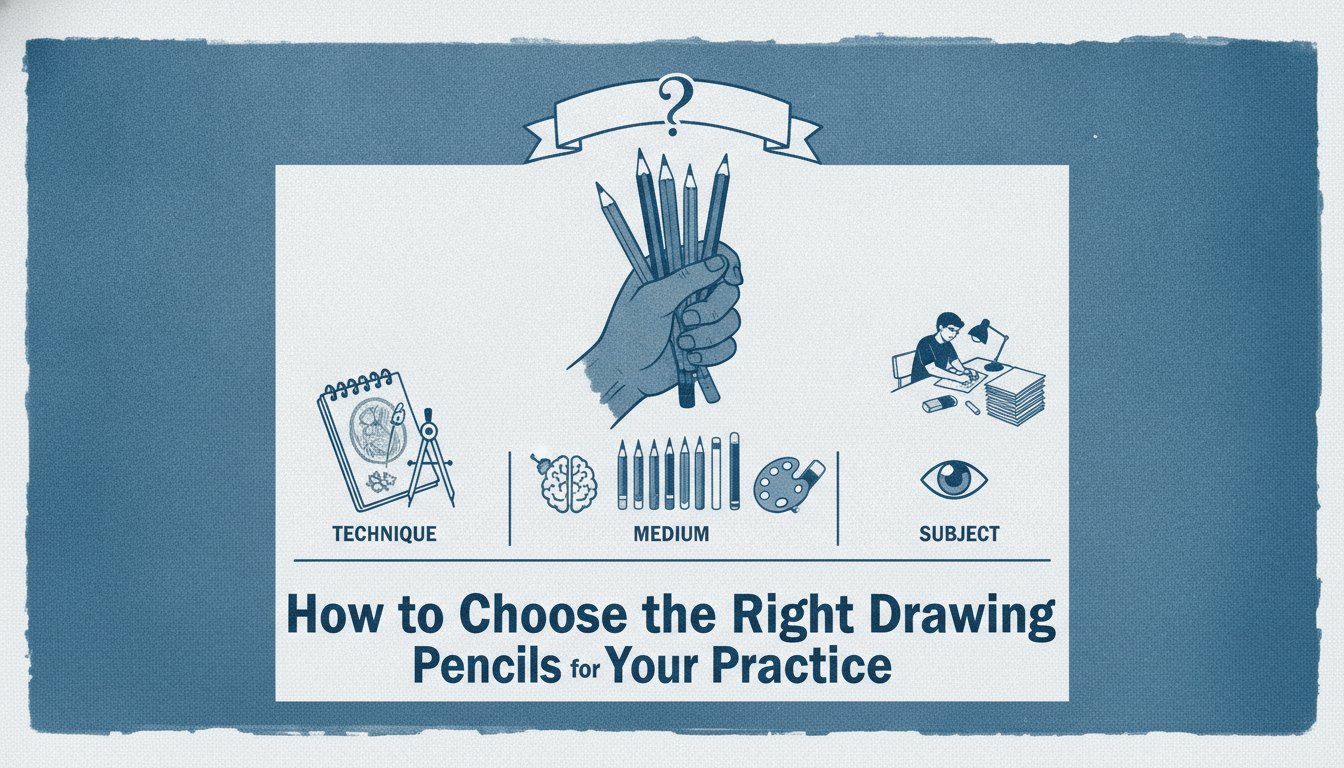
Here is how to turn those features into a decision, as most artists do.
-
Your main subject. Quick urban sketching needs only HB and 2B. Detailed portraits benefit from adding a 4B. Loose figure studies call for soft graphite or charcoal.
-
Preferred style. Clean line work leans on HB, H, or a mechanical pencil. Soft tonal shading leans on 4B to 6B or charcoal pencils.
-
Surface and size. Small A5 or A4 sketchbooks suit wooden pencils. Larger sheets favor woodless sticks or charcoal for broad shading. Smooth paper gives crisp lines, while paper with some tooth holds more graphite.
-
Budget and how often you draw. A few evenings a month, whatever the length of each session? Add three loose pencils and a pad to the cart. Several times a week? Buy a mid-range kit of six to eight grades.
-
Interest in color. Add a small 12-color set of colored pencils or a watercolor pencil set to your graphite core, and skip the huge color collection until you know which colors you use.
Simple Starter Pencil Sets I Recommend
I prefer lean kits to long shopping lists. I once bought a huge set because it looked like good value, used about four pencils, and the rest sat in the tin. Five sketching pencils can cover most needs, and most arts classes ask for no more. Here are four scenarios.
Minimalist Graphite Starter (3 to 4 Pencils from the School Supplies Aisle)
HB, 2B, and 4B (optionally 6B) plus an eraser and sharpener. That is five items for the cart, plus a small spiral pad, and it covers everyday sketching, simple still lifes, and lunch-break studies. Add a kneaded eraser, which lifts graphite without crumbs, and keep a white vinyl one as backup. Make a pressure scale on scrap paper to see how your pencils behave. For a quick rundown of the other tools, read about the basic drawing tools.
Shading and Portrait Sketching Kit (6 to 8 Pencils)
2H, HB, B, 2B, 4B, and 6B make a set of six that gives the subtle value shifts faces need. Add a blending stump and a kneaded eraser; those two items go in the cart with the pencils. It is also the kit I would suggest to art students in a visual arts class, and to adults doing weekend portraits. Pressing hard with soft pencils left shiny marks for me; layering light strokes worked better.
Expressive Charcoal and Graphite Combo
Two or three soft graphite pencils (2B, 4B, 6B), one or two charcoal pencils, and one vine stick. This kit suits figure artists, gesture practice, and dramatic lighting. Use a heavy mixed media pad from the arts store and add a workable fixative spray to the cart so the charcoal does not smear.
Graphite Plus a Touch of Color
Three to four graphite pencils plus a 12-color set of mid-quality colored pencils. Start monochrome, then add limited color accents without buying more art supplies. This combination is great for journaling or crafts and perfect for travel sketching, and it keeps kids and adults of different ages equally busy on a rainy weekend. Loose pencils broke their tips in my bag; a cheap cardboard box in the cart fixed it.
Start Simple and Draw Often
A small selection of drawing pencils is enough to learn core skills. Practice matters more than owning every grade, as most artists will tell you. Pick one starter set from the list above, add it to your cart, and draw this week, or join a sketch night at a local arts center. If you are still unsure what else to buy, see what beginners really need. A better blade will do more for you than extra art supplies.
FAQ
What pencil grades should I buy first as a beginner?
A practical starting trio is HB, 2B, and 4B. HB handles light structure, 2B covers general sketching, and 4B reaches into darker shading. Add a 2H for crisp detail or a 6B for deeper blacks. A mid-range student set is perfect for learning. If I could put only one pencil in the cart, it would be a 2B.
Are expensive drawing pencils worth it when I am just starting out?
Mid-range pencils are a great step up in smoothness from very cheap sets. Tombow Mono pencils feature high density graphite for clean lines, and Cretacolor MegaGraphite Pencils have a 5.8 mm lead for broad strokes. Top-tier lines are not necessary at the start, so I would leave the pricey tin out of the cart. Buy a small pack from an arts store you trust and add higher grades only when your pencils feel limiting.
Should I use mechanical pencils or wooden pencils for drawing practice?
Mechanical pencils give a consistent thin line and need no sharpening. Wooden sketching pencils offer more expressive variety, easier shading with the side of the lead, and a wider range of grades. A good middle ground: add one mechanical pencil to the cart for precision, plus a couple of wooden B and 2B pencils for everything else.
What is the difference between graphite pencils and charcoal pencils?
Graphite gives a grey line that erases cleanly and layers with control. Charcoal pencils give rich matte black lines, smudge more, and need fixative. The two types behave differently, so start with graphite, then try one or two of them once you can control your values.
How do I stop my pencil drawings from smudging?
Work from top left to bottom right (if right-handed) and rest your hand on a clean scrap sheet. Close sketchbooks before moving them, spray finished drawings lightly with fixative, and store loose sheets with clean sheets between them. A shiny look usually means pressing too hard with a soft pencil; lighter, layered strokes fix that.